





Distinguish output from response
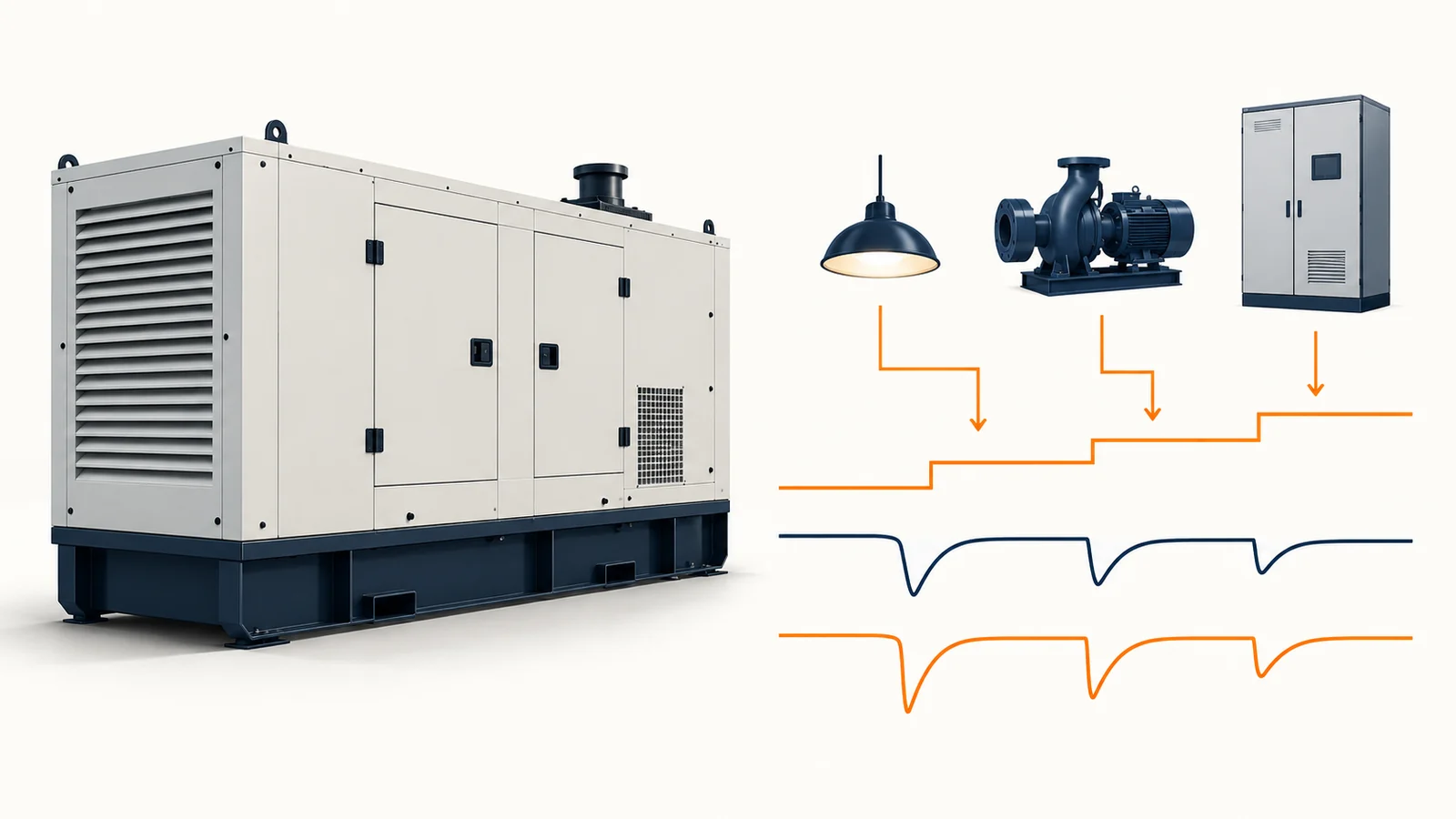
A gas generator may have enough rated output to supply a steady load and still need a separate assessment of its transient response. Connecting equipment changes electrical demand. Rated capacity and performance during a load step therefore require different tests.
In a generator set, the internal combustion engine drives the alternator. The generator converts mechanical energy into electrical energy through this machine. Motion and a magnetic field enable that conversion, following the principle described in the EIA guide.
Connecting a load can cause transient changes in voltage and frequency. The connected equipment must tolerate these changes for the recorded interval. A review of an industrial generator must compare both variables and their duration with the limits defined for the project’s loads.
Describe the loads and their sequence
Prepare an inventory of the equipment that needs an electrical supply. Distinguish steady operating demand from starting demand. Define which loads connect in the same stage and which can connect later. Adding rated outputs does not describe that sequence.
Record each stage’s initial demand and added block. Distinguish the load types and the requirements of motors, UPS equipment and other loads. The Caterpillar guide to standby gas generators highlights the importance of load type and the size of the connected block.
Starting a pump after connecting the lighting creates a different load scenario from connecting both together. This example does not define a universal sequence. The designer must confirm the stages for the industrial generator according to the project’s priorities.
Check rated voltage, phases and connection requirements using the selection data for a three-phase generator when reviewing the planned supply.
Request evidence for the proposed model
Gas generator load step response depends on the proposed design. It must not be inferred from results obtained with a diesel set. Request evidence for the offered model, including the engine and control-system components and settings included in the planned supply.
Section 4.3.3 of the Cummins manual for gas generator sets explains why starting loads and their sequence need attention. Its criteria apply to the equipment it describes. They do not establish a load-step percentage that is valid for every brand or model.
The report must state the initial demand, the applied step and the ambient test conditions, together with the recorded voltage and frequency changes. It must specify how long both variables take to return to the agreed range. It must also distinguish the project conditions it represents from those it does not cover.
Coordinate transfer and fuel
A standby generator forms part of a broader backup power design. The generator and the transfer between sources serve different functions. Coordinate the load sequence with the ATS review so both are included in the approved test plan.
Power supply during outages depends on generator performance, electrical demand and the fuel available under the planned conditions. A utility connection does not define the backup system’s performance. A fuel label does not demonstrate continuity of service either.
When comparing offers for different units, distinguish the fuel type: diesel, natural gas, LPG or another option approved for that model. Do not assume one unit can use all those fuels. Review the supply conditions with the supplier and manufacturer.
Agree on the test beforehand
Agree on the criteria each test must meet, including the permitted dip and the maximum time to return to the voltage and frequency range. The design lead must approve those limits for the planned loads. Do not copy values from another project that do not suit the equipment.
Competent personnel carry out the approved plan with suitable instruments. The records must allow each load change to be matched to the observed values. A single still image of the panel after the test does not show the full system response or how long each change lasted.
Document the connected equipment, initial conditions and each demand step, along with any changes between the tests included in the report. If results exceed the agreed limits, retain the evidence for technical review. Do not alter protection devices or gas settings to obtain favorable results.
Keep results comparable
Generators supply power within the conditions permitted for each model. A review therefore needs the same demand scenario and common criteria. Evidence from another model does not show that the offered set can supply power with the same transient performance under the project’s loads.
Review fuel consumption for the planned duty. Do not treat an isolated transient test as evidence of the generator’s service life. Retain the model, its components, settings and test conditions for handover. Any later change can then be reviewed using comparable criteria.