


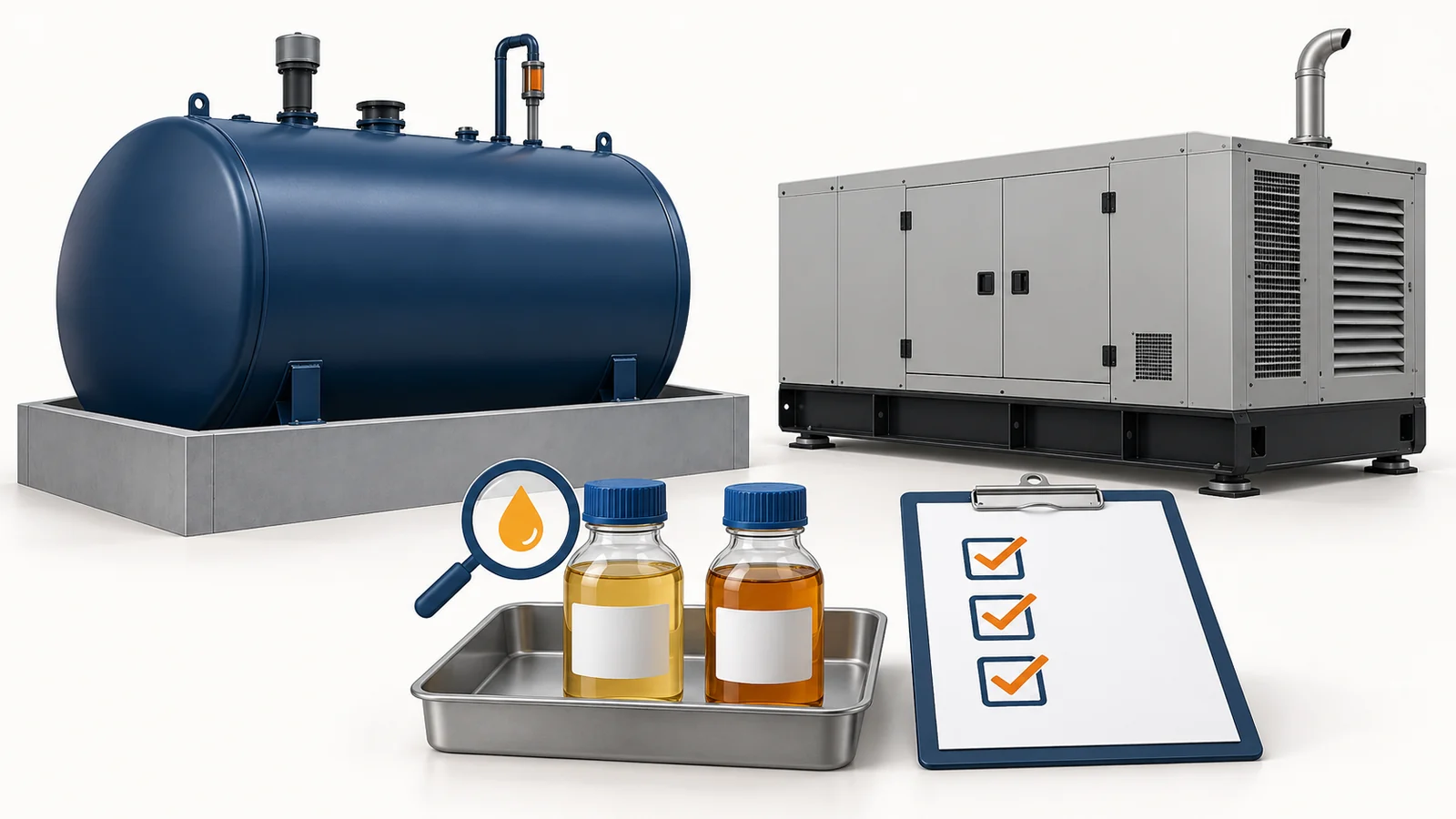



Plan stored diesel fuel checks
A diesel standby generator needs suitable fuel as well as sufficient volume. Industrial generators provide backup power when the utility grid fails. Diesel condition forms part of that backup plan, but it does not replace tests of the complete system.
When comparing power solutions, distinguish tank capacity from the quality of its contents. Record the fuel, tank and storage period.
Verify which fuel the generator set accepts and retain records of each delivery, blend or refill. The delivery date does not guarantee quality for a fixed period.
Review water and dirt entry routes
Cummins’ diesel fuel contaminants guidance explains how water and dirt can enter fuel. Moisture can condense as thermal conditions change. Water also supports bacterial and fungal growth that affects the fuel system.
Examine caps, seals and transfer components according to the manual. A damaged component can allow water or particles to enter. Investigate the cause; removing water once does not establish that the entry route has been resolved.
Fuel appearance provides clues, but it is not enough to approve the product. Clear-looking fuel can still need testing for other parameters. For blocked filters, starting problems or lost output, also consider common issues with diesel generators. Those symptoms have more than one possible cause.
Define samples that can be compared
Cat’s sampling and reporting guidance stresses sample cleanliness and the value of tracking trends. Agree on the sampling point, method and container with the testing service. Samples from different locations do not always describe the same condition.
Use the specified equipment and containers, and prevent dirt from containers, hoses or the surroundings from entering the sample. Poor sampling can change the result and the resulting fuel decision.
The label and record must state the tank, equipment, date, sampling point and responsible person. Record deliveries, cleaning and filter changes to distinguish fuel changes from changes in the sampling method.
Set the frequency using the manual, environment, duty and importance of the electrical supply. Do not apply one interval to every industrial generator or wait for an outage to start monitoring.
Read the technical report before choosing an action
Cat’s generator fluid analysis programme includes checks of diesel condition, contamination and bacterial or fungal growth. Request tests and limits relevant to the engine and actual stored reserve.
Distinguish the test result, assessment criterion and service decision. The analysis provides evidence; the criterion used to assess it must suit the engine and actual product. The final decision needs a technical record and support from the responsible project representative.
Check the sample reference and tank identified in the test report. Review methods, units, results and limits against the manufacturer’s requirements. One isolated result does not define the complete condition; ask the testing service to explain alerts and any need for further samples.
If fuel consumption changes, record load and running hours before attributing the change to diesel quality. Also review the causes of high diesel fuel consumption. Different consumption may reflect duty or an engine fault; it does not establish that the stored fuel is degraded.
Correct the cause and check the outcome
If a contractor offers cleaning services, request a written scope and criteria for closing the work. Identify the tank, circuit, waste to be removed and test method. The offer itself does not replace diagnosis.
Consult the parties responsible for the engine and fuel before using an additive or treatment. Do not assume that one product suits every generator type. Technical work, waste removal and further tests must follow the applicable project and equipment instructions.
Document the action and agreed test method. Depending on the problem, a further sample and system test may be needed. A power source is not ready to supply energy simply because a cleaning invoice exists. Technical closeout requires test results and named people with defined responsibilities.
Retain the service evidence
The industrial generator set’s technical record should bring together fuel deliveries, samples, reports, actions and subsequent results. Include test conditions and permission to restore power under the project’s work programme. Fuel quality does not replace checks of load, transfer and engine condition.
Engine exhaust contains carbon monoxide. Operators must not run portable generators indoors. You may install a fixed industrial generator in a dedicated generator room designed for the selected equipment. The room needs suitable ventilation, exhaust discharge and fire protection under applicable local requirements.