


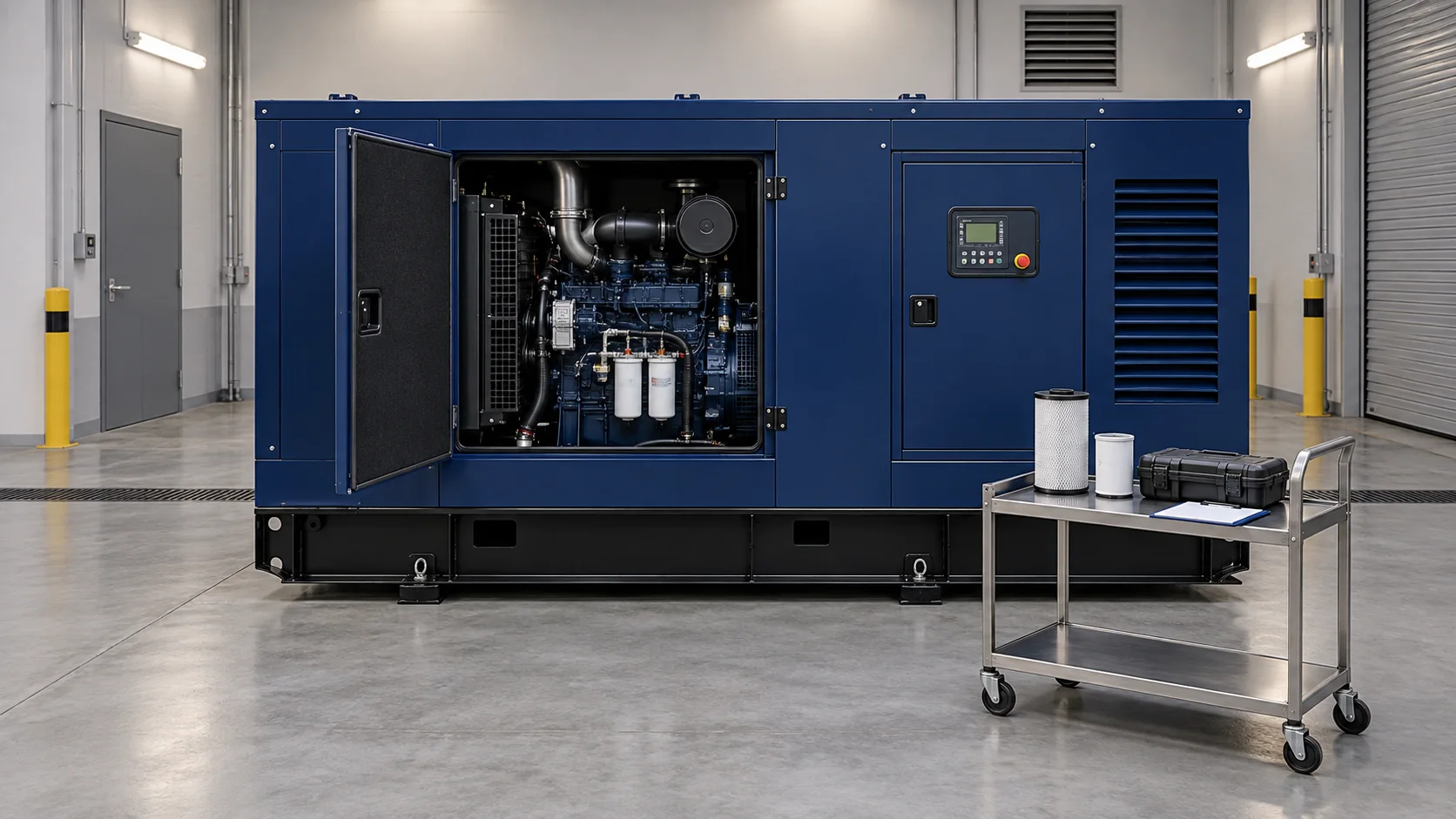



Scope and Service Plan
This guide covers stationary industrial diesel sets and their maintenance plans. Proper standby generator maintenance follows the engine manual and site conditions. A backup generator maintenance plan sets out tasks and records. Run hours and calendar dates set inspection intervals.
Each standby generator needs a plan for its actual site. Weather and dust can change when the set needs service. Qualified staff plan these changes using the set maker’s guidance. Staff review site demands rather than guessing needs.
Checks and Due Dates
The Caterpillar preventive maintenance page recommends at least monthly standby inspections. A sound preventative maintenance plan follows the engine manual. Due tasks depend on run hours and the site’s conditions. Qualified staff inspect the backup generator and log observations.
Routine maintenance helps staff find developing faults before severe damage occurs. Plant teams track known risks by reviewing logs of common generator faults. Regular maintenance schedules include agreed battery and cooling checks. Qualified staff carry out repairs under the site safety plan.
Fluids and Filters
Qualified staff inspect fluid condition, visible leaks, and cooling lines. Checking coolant levels helps staff detect leaks and low fluid levels. Technicians inspect the engine air filter against manual restriction limits. Manuals define approved inspection points for intake air.
Staff inspect fuel system lines to detect leaks or loose fittings. Fuel filter replacements limit dirt that reaches the injection pump. Fuel quality and run hours determine when filters need service. Qualified staff carry out all servicing under site rules.
Load and Run Tests
Staff may observe a generator running smoothly during an unloaded run. However, an unloaded run does not prove load capability. Extended low-load running can cause soot buildup and engine wear. The Caterpillar underloading paper documents these potential service risks.
Engineers choose approved load tests when building demand is low. The approved plan may use a load bank to test output. The test plan must suit the site’s actual switchgear design. Testing teams record engine temperatures, test load, and run duration.
Staff and Site Safety
The site plan sets out which tasks each role can do. Operators record gauge readings, fluid levels, and enclosure conditions. Qualified technicians perform required generator service under the site safety plan. This guide does not provide live electrical or bypass steps.
Sound generator maintenance relies on agreed roles and defined task scopes. Site teams arrange external operation and maintenance support for major overhaul work. Clear roles support safe practices around plant switchgear and panels. Staff agree who responds to faults and which tasks they do.
Records and Next Tasks
A backup power system supports industrial sites during power outages. Detailed logs track completed work, running hours, and due maintenance tasks. A clear service plan can offer peace of mind about planned tasks. Regular servicing never eliminates the risk of sudden equipment failure.
Plant records track run hours, physical observations, and test results. Technicians log completed service tasks and schedule upcoming inspection dates. The site rules state how long staff must keep these records. Accurate logs help engineers assess equipment readiness for future power demands.
Each entry can link the model and serial number with the date, run hours, and person doing the check. That person notes the check or manual reference, logs the reading or observation, and marks a satisfactory or unsatisfactory result. When an issue remains unresolved, planners link the follow-up task to a responsible person and a due date.