


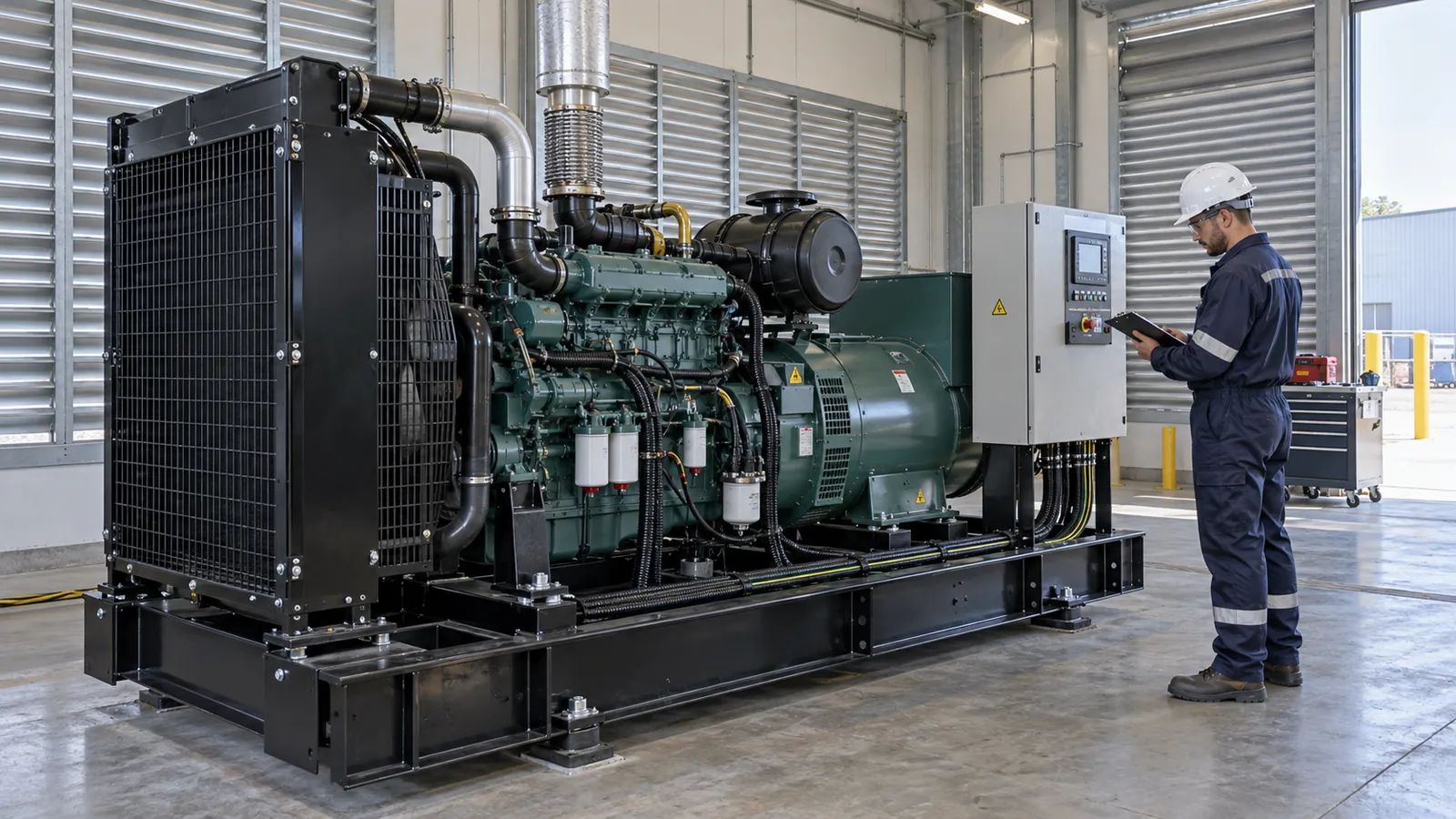



Sites rely on industrial generators during power outages. Catching small faults early protects standby power. Regular maintenance lowers the risk of common generator problems.
Quick Triage Guide
Use this table to check warning signs quickly. If alarms persist, check your manual and site procedures.
| Symptom | Operator Check | Qualified Action |
|---|---|---|
| Engine cranks slowly | Check battery charger meter and starting logs | Test starting circuit and battery condition |
| Low coolant temperature alarm | Check fitted heater indicator and coolant gauge per manual | Test block heater circuit and thermostat |
| Dark exhaust smoke under load | Inspect intake openings and filter restriction gauge | Test airflow and inspect fuel injectors |
| Black liquid from exhaust | Check run logs for extended light loads | Schedule approved load test and inspect exhaust |
1. Battery and Starting Faults
Old batteries often cause startup failures. Over time, they lose capacity and cranking power. Operators check the battery charger and starting logs to spot weak units early.
Per Caterpillar battery care advice, clean and tight terminals lower starting risks. Isolate auto-start controls and stored energy before touching cables. Follow the manual and use protective gear during visual checks. Qualified technicians must service batteries and test them under load.
2. Water and Dirt in Fuel
Diesel fuel degrades over time in storage tanks. Trapped water can support bacterial and fungal growth. Dirt can restrict the fuel filter. This may harm engine performance.
Check fuel and service the water separator per your manual and site plan. Standby equipment needs time-based fluid checks, as engine makers advise. If fuel stays dirty, hire a qualified mechanic to find the root cause.
3. Wet Stacking and Light Loads
Extended runs under light loads can keep cylinders below normal operating temperatures. Unburned fuel and soot may collect in exhaust passages. Technicians call this condition wet stacking.
To help manage this common problem, review Caterpillar generator underloading guidance. Where appropriate, qualified staff run approved load bank testing per manufacturer procedures. Always record the applied load and test results.
Approved testing helps assess engine operation and manage light-load effects. However, testing is not a universal repair. It never replaces a qualified diagnosis for persistent exhaust liquid.
4. Air Intake Problems
Engines need clean air to burn fuel properly and run smoothly. Blocked intake louvers or restricted piping reduce airflow. This restriction can lower combustion efficiency. It can also raise operating temperatures.
Per Caterpillar engine maintenance advice, dirty air filters restrict airflow. Reduced airflow can lower efficiency. It can also raise fuel use and emissions.
Check restriction indicators regularly based on site dust conditions. Replace elements per your manual.
5. Cooling System Leaks, Faults, and Aging
Cooling systems manage heat in standby equipment. Heat and age can damage coolant hoses and cause leaks. Depending on the equipment, low coolant levels may trigger a protective automatic shutdown.
Check cold coolant levels and inspect for leaks. Check for clear airflow through the radiator. Keep hot, pressurized coolant caps closed to avoid injury.
If your system has a block heater, check its status per the manual. Base your service schedule on equipment manuals and site conditions.
6. Control Panel and Auto Settings
Leaving the master switch in Off or Manual may prevent an automatic start. This depends on equipment and site procedures.
Use room-exit checklists to avoid switch errors. Do not clear alarms without checking the cause. Close breakers only with proper approval.
Qualified staff must log faults and finish repairs before an approved reset. Restore breakers and transfer switches to their site-specific prescribed states. Return the controller to Auto where applicable.
7. Hazardous Energy and Safety Protocols
Servicing generators exposes staff to electrical, thermal, and mechanical hazards. Automatic-start controls can crank the engine without warning. This poses risks near moving parts or live terminals.
Operators must limit work to permitted checks within their training and manual. Qualified staff handle intrusive electrical or mechanical repairs. Per NIOSH hazardous energy control guidance, follow applicable lockout/tagout procedures. Technicians must isolate stored energy before opening enclosures.
If an alarm sounds, follow site response procedures. Check your manual before escalating the issue. For equipment assistance, visit SEER POWER service and parts support.