


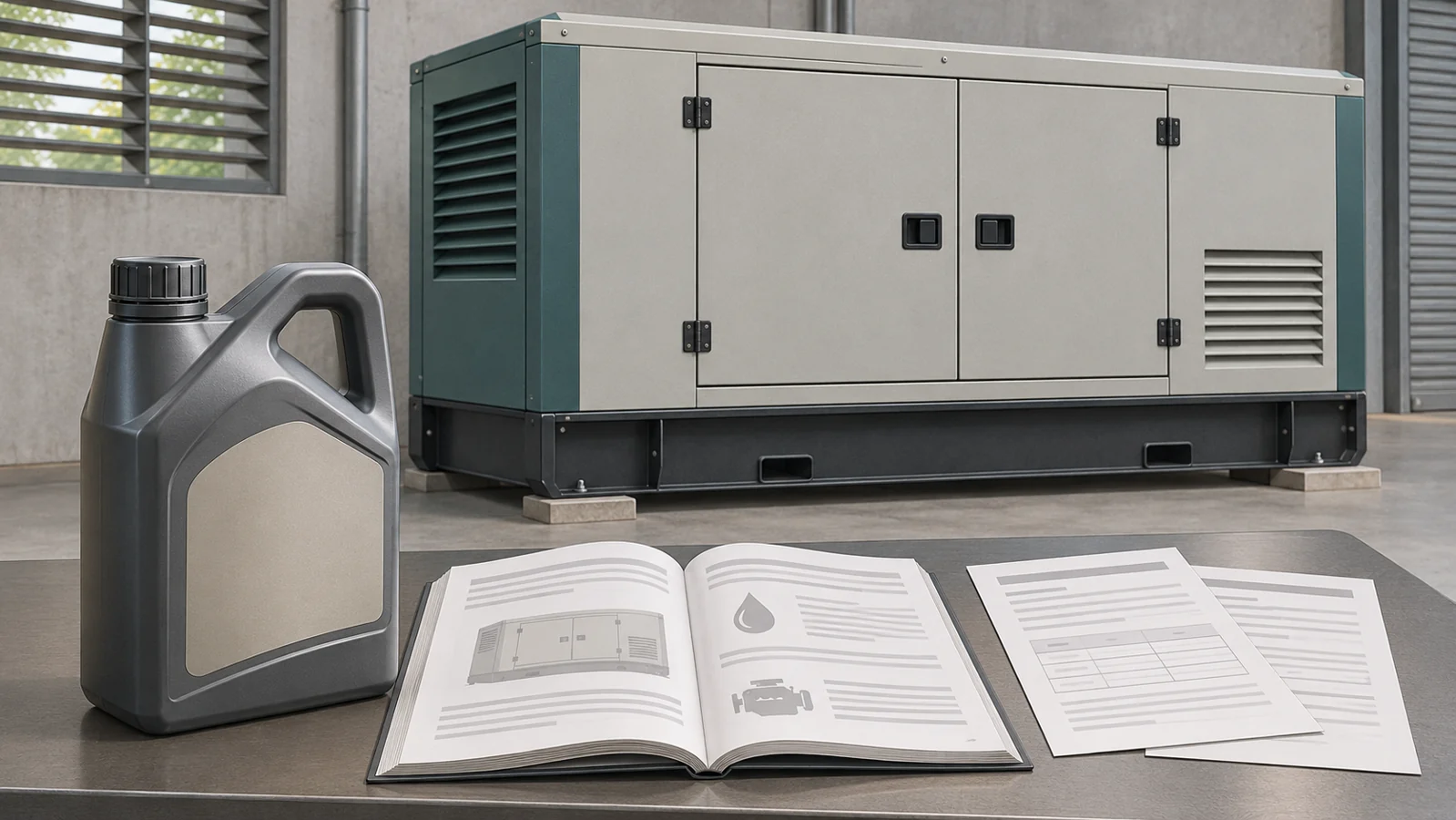



Identify the Engine and Its Oil Rules
Sound diesel generator oil selection begins with the exact diesel engine model. Modern generators offer a wide range of electrical packages.
Never choose oil by generator size or power requirements. A 500 kw generator set tag cannot pick oil for an enclosed genset. Electrical power output never sets oil rules.
Checking diesel fuel, fuel type, or main or backup power sources cannot select oil. Markings on a fuel tank and fuel tanks cannot choose oil for a diesel generator. Natural gas generators, generator brands, and types of generators never set engine rules. When advice conflicts with the manual for a diesel generator set, current engine documents control.
Separate Oil Class from Oil Grade
Oils sharing a viscosity grade need not share performance or approval. Labels like heavy duty, fuel efficient, or high quality never prove oil approval. An emissions standard or tier 4 final badge on a powerful generator cannot prove oil fit.
Per the API oil categories guide, newer diesel categories do not always cover earlier needs. API rules state that FA-4 cannot automatically replace CK-4, CJ-4, CI-4 PLUS, CI-4, or CH-4 oils.
This rule covers older engines. Never assume newer oils replace earlier grades in every diesel genset. Use FA-4 only when the engine maker permits it.
Match the Oil to the Site and Weather
Engine oils blend base stocks with additives. Viscosity shifts with temperature.
Oil must flow in cold starts and protect under hot loads. Follow the engine maker ambient-temperature chart for the unit. Never choose heavier oil solely because local summer weather is warm.
Check climate conditions for an industrial generator at a plant job site. Review the same rules for portable generators across construction sites and active job sites.
Keep the Oil Checks and Proof on File
Record the engine make, model, serial number, and current manual revision. Note the required performance class and allowed ambient viscosity. Include formal OEM approval proof only when the maker requires it.
Note the oil product name and attach a current data sheet. List the reviewer identity and open questions.
Supplier claims cannot replace required OEM proof. If requirements leave unresolved questions, stop before using the oil. Obtain a written answer from the engine maker.
Review Site Use, Oil Care, and Shared Oil Stock
Standby generators wired to an automatic transfer switch wait for a power outage. They also run during planned tests.
Moisture and heat effects can differ from engines delivering continuous power. Some automatic transfer switch controls start engines. However, an automatic transfer switch never establishes oil readiness.
Review oil care alongside an industrial standby generator maintenance plan. Track preventive maintenance intervals by operating hours and calendar time under the maker plan.
Qualified staff must handle oil service under site safety rules. Commercial generators or a mixed industrial genset fleet demand unit-by-unit checks.
Shared drum viscosity never justifies combined stock over the long term. Commercial claims offering peace of mind remain marketing statements rather than equipment warranties. Oil alone cannot guarantee continuous operation in the long run.