


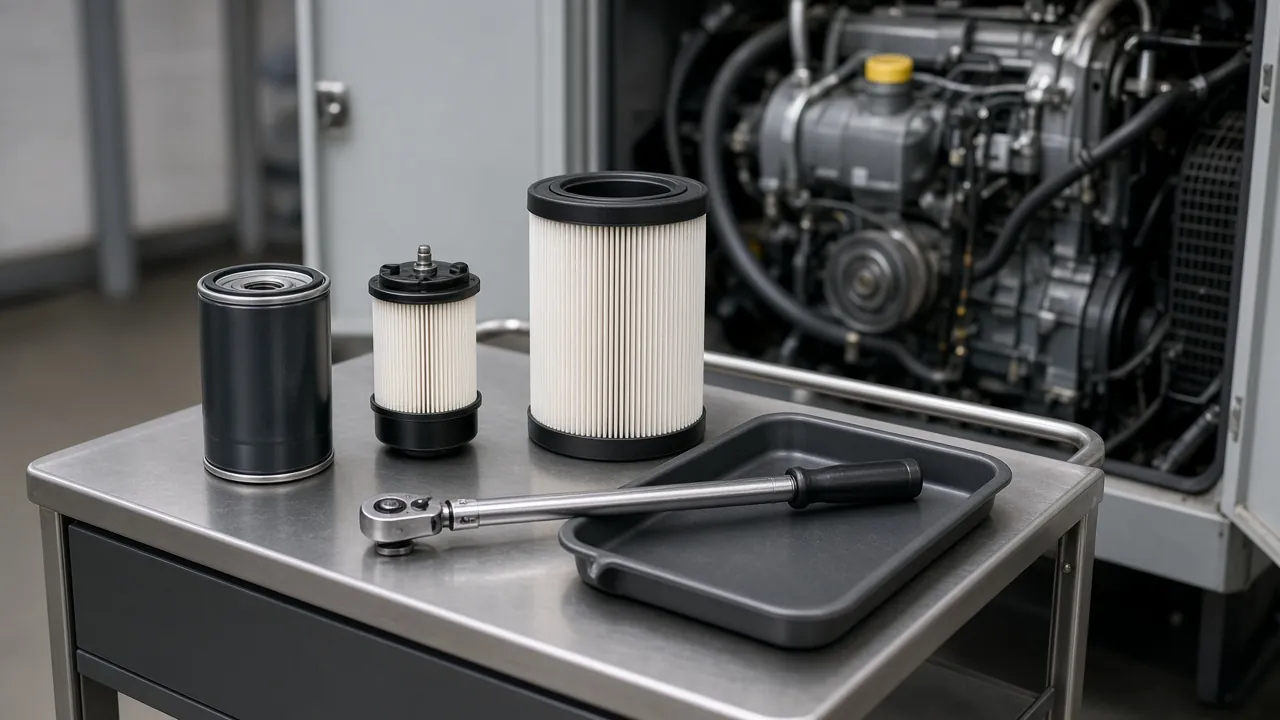



Why Emergency Generator Preventive Maintenance Matters
Running an emergency generator preventive maintenance program in Mexico helps the equipment work during a power outage. A clear preventive maintenance plan can support the system’s readiness to supply electrical power. A complete generator set, or genset, converts mechanical energy into electrical energy. In this setup, an internal combustion engine drives an alternator, which serves as the electric generator.
This conversion happens both in periodic tests and during utility grid failures.
Still, the equipment also wears down during idle periods. Continuous-duty generators in a power plant run on a steady production schedule. In contrast, an emergency generator set may remain shut down for weeks.
Without regular preventive maintenance, old fluids or weak batteries can keep the unit from starting on time. A properly serviced unit may restore the backup power supply within seconds after an outage.
Regularly servicing each subsystem helps protect your emergency power and extend generator service life. Where fitted, service air filters only as the model manual directs. This routine care supports reliable generator performance.
For record keeping, see our guide on standby generator maintenance, plans, and records. The sections below list the tasks by interval and identify who is responsible for each one.
Weekly Tasks
Weekly checks are quick inspections that the site manager performs with the equipment shut down. These checks confirm that the backup generator remains ready to start.
The manager checks the base for oil, coolant, or fuel leaks. If the engine or fuel system shows a problem, read our guide on common issues in diesel generators.
During the weekly visit, the manager checks fuel availability. Depending on the fuel type, the manager inspects the diesel tank, the natural gas supply line, or the LPG tank level.
The manager also checks the battery charger and the condition of the terminals. Finally, the manager confirms that the control panel remains set to automatic mode.
Monthly Tasks
Each month, the operator runs the unit at 60 Hz for the time stated in the model manual. While the generator operates, the operator monitors the control panel to confirm that oil pressure and temperature stabilize.
A diesel generator may show abnormal smoke or high fuel use. Operators can review the causes of high fuel consumption in generators.
With the engine running, the operator inspects the exhaust system for leaks, excessive vibration, or loose brackets. Exhaust contains carbon monoxide, so never operate a portable generator indoors.
You can install a stationary industrial power generator in a dedicated technical room designed for the equipment. The room needs adequate ventilation and must discharge exhaust gases outdoors. It also needs fire protection that meets applicable local standards.
The site plan may require this check. When specified, the operator checks the transfer switch. The switch connects the power source during power outages.
Semi-Annual Tasks
Every six months, following the engine and alternator manuals, a qualified technician performs a complete preventive service. On this visit, the technician changes the oil and filters as the manufacturer data sheet directs. The technician also inspects the radiator and cooling systems, checking coolant concentration and level.
Next, the technician checks belt tension and wear on the fan belts and charging alternator belts. Then the technician cleans the ventilation louvers on the enclosure. Our guide on generator enclosures, airflow, and noise explains how.
Finally, the technician inspects the control terminals in the electrical system. Making sure these connections stay tight prevents loose contacts.
Annual Tasks and Load Bank Testing
Annual emergency generator maintenance is a full electrical and mechanical inspection. Specialized technicians perform this work. On the alternator, the technician measures the winding insulation.
The technician also checks the voltage regulator. It controls the field excitation and the resulting magnetic flux.
Real power equals the product of apparent power and power factor (kW = kVA × PF). Use PF = 0.8 only when it matches the declared equipment rating or a stated calculation assumption. For a load study, evaluate the actual load power factor and starting characteristics.
If the unit ran at low load during the year, the technician runs a load bank test. The load bank simulates the actual electrical loads in the building. This test verifies the 60 Hz response of diesel units.
We test our units at the factory under our quality assurance standards. This covers lines such as the 30 to 125 kVA diesel series.
This series gives 24 to 100 kW of prime power. One example is the SP-30WC with a Weichai WP2.3D40E200 engine. Other product lines exceed 1875 kVA.
Who Performs Each Task
Clear responsibilities prevent missed tasks and safety hazards in any standby power system. Building staff perform the weekly visual inspections and keep the generator room clear. Qualified technicians always change filters, make mechanical adjustments, and run insulation tests.
At industrial sites where the utility grid fluctuates frequently, the manufacturer manual allows adjusting maintenance plans and service intervals. Our service commitment provides expert support to keep the equipment ready.