





Identify the Mine Gas
Mining teams must check actual gas from different fuel sources. Coal mining operations release or capture coal mine methane. In contrast, gas fields produce coalbed methane directly as an energy asset.
Resource labels alone do not prove gas chemistry or engine fit. Coal mine methane power generation uses drained gas rather than exhaust air. Dilute ventilation air methane cannot fuel ordinary gas engines.
Buyers review broad types of generators for site fit. A buyer might choose a coal mine methane generator package. Onsite electricity generation is one possible use among several gas options.
Power projects do not fit every mine site. The engine maker must review actual fuel data. The Environmental Protection Agency explains these project limits (EPA).
Local fuel quality, site safety, and costs shape the final choice.
Keep Mine Safety First
Mine ventilation and drainage safety must remain the absolute priority. Ventilation and drainage systems run independent of power demand. Operators must never restrict mine ventilation to enrich generator fuel.
Crews must never alter drainage settings to enrich engine fuel. Surface power plants must never put underground mine safety at risk.
Qualified mine, process, and electrical teams agree on plant boundaries. These teams set protective duties under local site rules. Drained gas serves as a power source only within accepted project limits.
Site teams need an engineered safety plan. The plan covers gas monitoring, detection, isolation, and shutdown actions.
This plan assigns clear roles for engine trips and maintenance periods. The site plan assigns gas-handling roles for trips and shutdowns. It also covers maintenance and off-envelope fuel.
Mine ventilation and drainage safety must stay independent of power demand.
Check Gas and Flow
Buyers need gas reports that reflect actual site gas. Teams must also complete field checks. Teams also collect long term time-series flow records when available.
Documentation shows usable flow, pressure, temperature, and rates of change. Gas tests report methane, other gases, and heating value. Tests also include oxygen where applicable. All test records must state reference conditions clearly.
Teams must check moisture, dust particles, and other contaminants. Gas tests alone cannot prove actual liquid carryover under field conditions. Mine gas exhibits natural swings in flow and pressure.
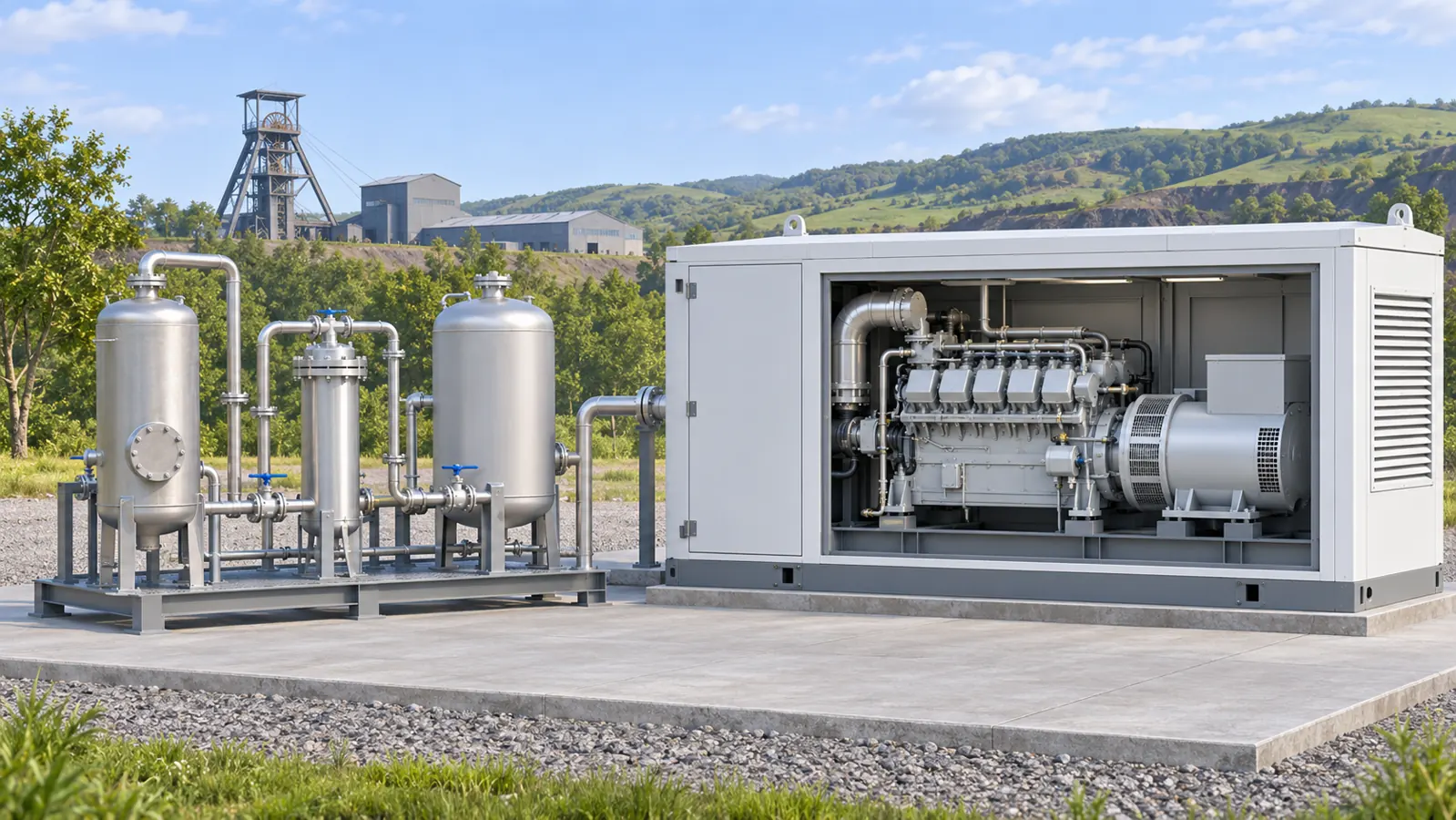
In this guide, a gas generator set or genset pairs two main items. It links a piston gas engine with an electric generator.
Teams review the selected engine and controls for actual swings. Fuel swings must stay within the maker-approved range. The selected maker sets clear fuel limits for each model.
Technical papers explain engine responses under changing mine gas (Caterpillar). Project teams match equipment to site records rather than generic claims.
Get Written Fuel Approval
Catalogs list many natural gas generator sets. Those labels do not prove actual mine-gas fuel approval.
Standard commercial units do not always handle drained mine gas. A buyer seeking a natural gas generator must provide site records.
Quotes for a natural gas genset need verified gas tests. Catalog descriptions cannot establish the selected maker’s actual fuel approval.
Engineers compare proposed package options with broader load and site data. The engine maker must approve the fuel envelope in writing. The maker confirms the actual engine setup and site rating.
The maker also confirms operating and minimum-load limits. The maker also sets allowed fuel pressure swings.
Teams add fuel treatment only as needed for engine inlet limits. Buyers must set treatment supplier outlet guarantees and test rules. Teams can review general gas package options for initial layouts.
These general listings do not replace fuel-specific maker approval.
Check Net Power and Handover
Rating an industrial generator requires confirming local site conditions with the maker. The maker checks elevation, air temperature, fuel data, and duty. A nameplate rating does not prove actual site power output.
Teams check actual auxiliary loads for the industrial genset site. These loads may include gas treatment, compression, or cooling as applicable.
Project teams define net electrical power at an agreed boundary. Teams deduct actual auxiliary loads once, avoiding double counting. Buyers must request maker fuel efficiency data for actual approved gas.
This data must also cover planned duty and load. Treatment, compression, and cooling loads directly affect operational costs.
Buyers aim for a cost effective power project. Actual costs, site loads, and net power help teams judge if the project can work financially (EPA).
Qualified engineers review the plant electrical system, protection, and controls.
The design supports the agreed island or grid mode.
Site teams check equipment availability early. Teams also review maintenance access early. Handover needs clear roles between mine and plant staff.
Teams gather test records and regulatory approvals that apply. Teams retain needed maker maintenance guides.
Teams agree on actual applicable records and handover roles. These agreed records support daily plant work.