


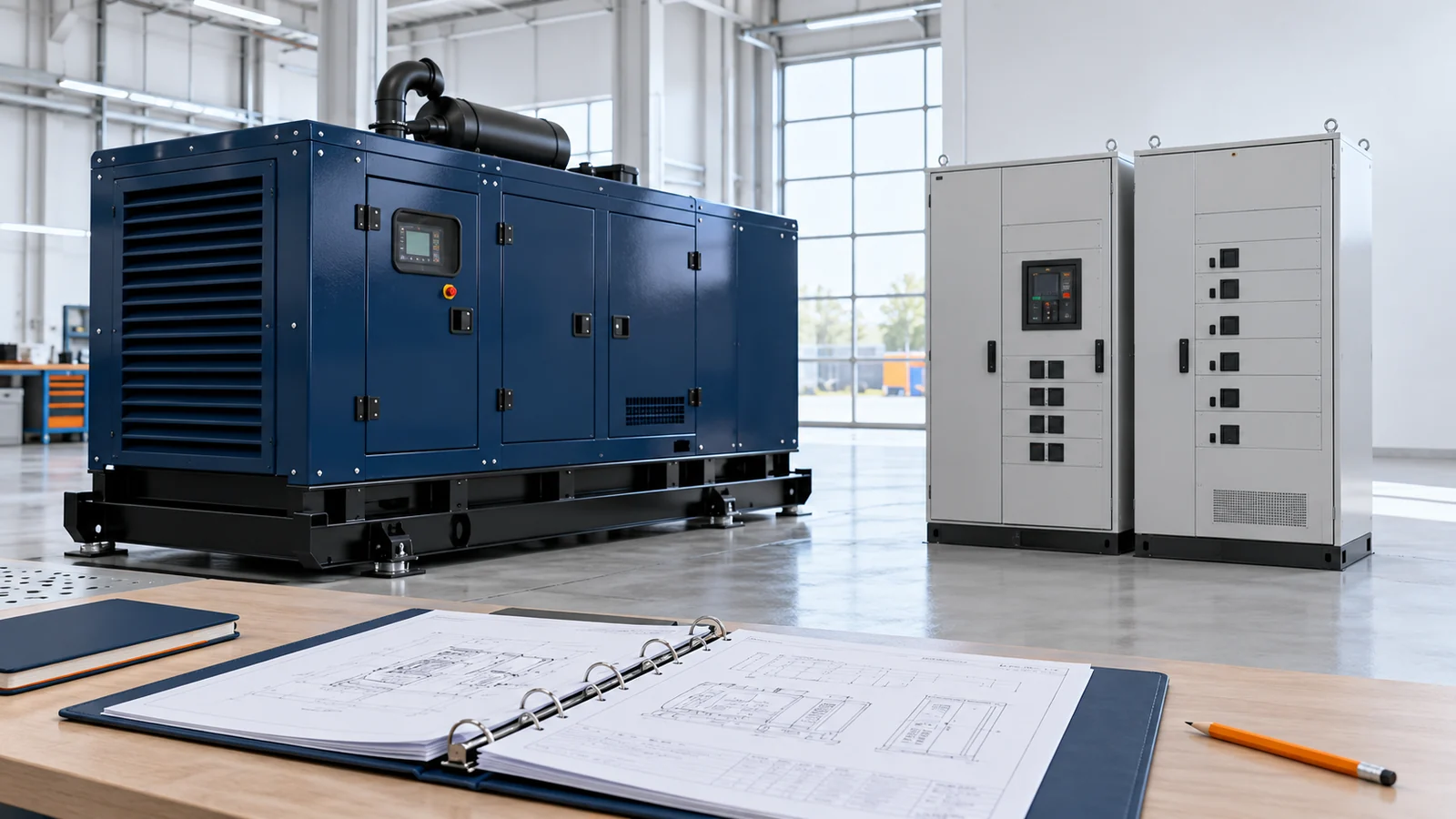



Start With the Actual Configuration
A 480V generator needs a clear set of output data. The voltage label does not state its phases, frequency or current limit. Ask for the model datasheet and site drawings. Confirm that both documents cover the quoted unit.
For an industrial generator, identify the voltage measurement points. Record the winding type and the site neutral requirements. A qualified engineer must check these records against the loads.
A missing drawing prevents a complete assessment. A brief sales label does not prove the output scheme.
The Cat C7.1 specification lists 208–480 V and 60 Hz. This range does not prove that every unit can supply all the listed voltages. Confirm the selected configuration in the proposal and retain it with the order. Other versions may have different output limits.
Separate Voltage From Capacity
The power output of a generator set depends on its ratings and site conditions. Voltage alone does not set the generator size. The datasheet must state rated kW, kVA, power factor and duty.
Confirm the ratings covered by the quoted price. A nameplate value needs its stated duty and limits.
For a standby generator, list the loads needed during a power outage. Identify simultaneous starts in the load schedule. State the permitted outage duration for each load. The load study must cover starting demand and the needs of sensitive loads.
An industrial genset combines an engine and alternator with separate operating limits.
As the EIA explains electricity generation, motion can produce electric power through a magnetic field. This principle does not establish whether the unit suits the proposed power supply. Its electrical output still requires a load assessment.
Check Every Load Interface
Record voltage, frequency, phases and starting requirements for each load. Include its make, model and start order in the schedule. Retain the reviewer’s name and review date.
Request any missing value. Use confirmed model data to resolve any gaps.
The Cummins T-030 application manual treats frequency, phases and voltage as separate inputs. Its phase-load guidance also shows why total kW is not enough. Use the limits for the actual alternator and complete genset. Another model’s limits do not prove this unit fits.
If a load needs a different voltage, request an engineering review of its supply path. A proposed transformer requires its own ratings and load assessment. A generator voltage change cannot replace the approved electrical design.
Review Transfer and Protection Boundaries
Record who supplies the transfer switch, switchboards and controls. The drawings should show which sources and loads the switch serves. Assign the voltage, frequency and current checks to a named person. The engineer must also review how the protective devices work together.
The neutral scheme needs its own project review. The ASCO neutral configuration guidance distinguishes solid, switched and overlapping arrangements. No single arrangement suits every 480 V installation. Qualified professionals must assess the actual system and applicable requirements.
Retain the chosen scheme with the approved drawings. Record who reviewed the neutral arrangement and which equipment it covers.
This is a review of documents, not a guide to wiring work. It gives no steps for joining conductors or changing live equipment. Site work needs qualified staff and approved procedures.
Compare Fuel and Documentation
The fuel type does not show whether a unit meets the load needs. Compare the engine configuration, supply conditions and operating duty.
Units with diesel engines require the fuel records for that model. A natural gas generator needs its own confirmed supply data. Equal voltage does not mean that these fuel systems can replace one another.
For natural gas or LPG power projects, contact SEER POWER. Share your load, voltage, operating duty and fuel-supply details to discuss the configuration.
Ask what each generator offers within the quote. A high quality claim needs records and agreed checks. Reliable power depends on the whole system, its upkeep and the site conditions.
State the scope included in the price. Assign each open item before placing the order.
Preserve the Acceptance Record
Keep the approved load list, drawings, settings record and test plan. Check the unit delivered against the order. Resolve gaps before signing technical acceptance.
Assign responsibility for holding the final records. Keep them easy to find over the long term.
Use the standby maintenance planning guide to organize subsequent service records. The guide to common diesel generator issues provides a separate reference for inspection planning. These guides do not replace the model manual or agreed acceptance tests. Each test record must identify the equipment, load and conditions assessed.