





What a diesel electric generator is and when it makes sense
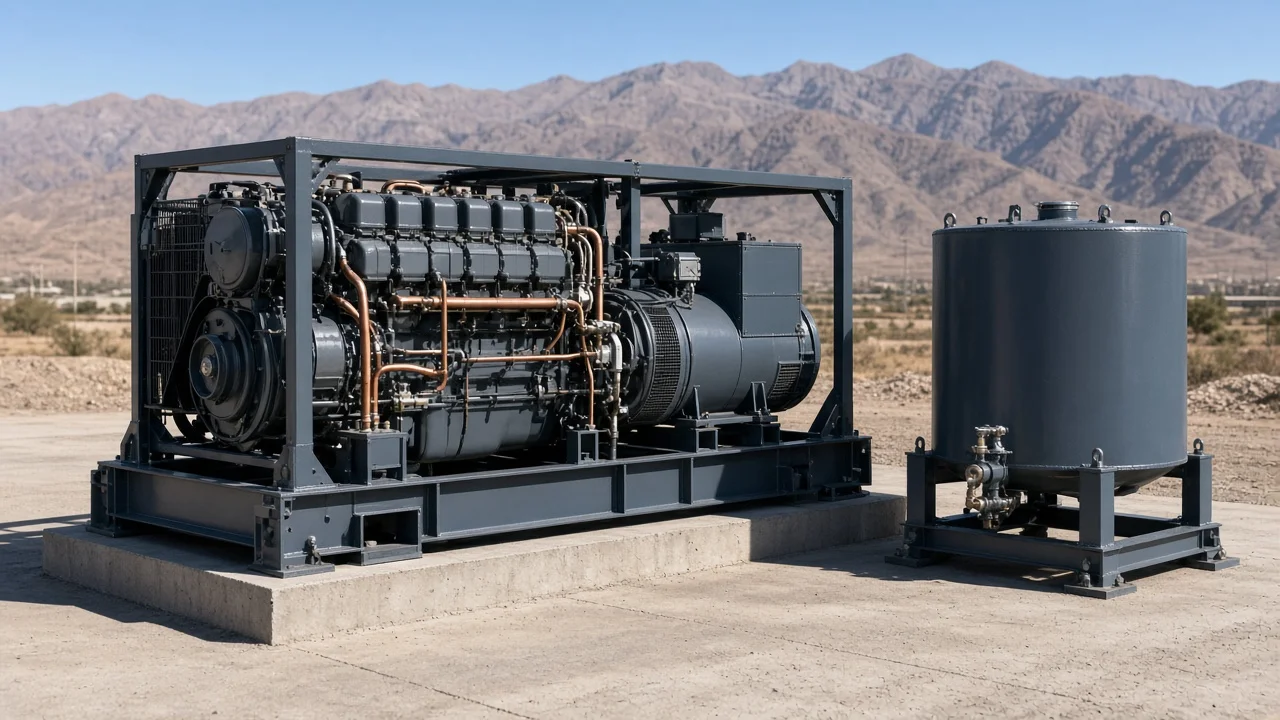
A diesel electric generator converts the chemical energy of fuel into mechanical energy and then into electrical energy. It uses an internal combustion engine mechanically coupled to a synchronous alternator.
The diesel engine is robust, starts reliably and can store its own fuel on site. That makes it a practical power source for plants, warehouses, mines and farms without a stable grid. To compare generator types by fuel, see the guide to choosing by duty and fuel.
SEER POWER builds industrial diesel sets in series from 30–125 kVA up to more than 1875 kVA. For natural gas or LPG power projects, contact SEER POWER. Share your load, voltage, operating duty and fuel-supply details to discuss the configuration.
Diesel engine and alternator: how they work together
The generator set joins the diesel engine and the alternator on one steel skid. The engine turns at a constant speed, and the alternator rotor induces alternating current in the stator. An automatic regulator keeps the voltage stable as the load changes.
The real power formula is kW = kVA × PF. Use PF = 0.8 only where it is the declared equipment rating or an explicit calculation assumption. Use the load’s actual power factor and starting characteristics for the load study.
The 30 to 125 kVA diesel series covers 24 to 100 kW prime at 50 or 60 Hz. Its SP-30WC model delivers 30 kW prime (37.5 kVA) and 33 kW standby (41.3 kVA) with a Weichai WP2.3D40E200 engine. For larger demands there is the 125 to 375 kVA industrial series.
Prime or standby duty and required power
Standby duty covers backup during grid outages, with variable load and no overload allowed. Prime duty, by contrast, applies to a unit that serves as the main power source at a site without a grid.
To calculate the required power, first add the lighting and heating loads. Then add the electric motors at the facility. Industrial pumps, compressors and fans draw several times their rated current during starting. For this reason, it is best to stagger their connection with timers, soft starters or variable frequency drives.
50 Hz grid and voltages in Chile
The Chilean power system operates at 50 Hz. Industrial facilities commonly use 220 V single phase and 380 V three phase. Always confirm the exact voltage and the neutral arrangement with your utility. An authorized electrical installer must then validate the transfer panel and the corresponding protections.
Fuel quality and storage
The injection system needs clean fuel, free of water and solid particles. Use clean tanks, drain settled water regularly and install separator filters in the supply line. If you notice high consumption, review the causes of high diesel consumption.
Maintenance, safety and supplier
Service life depends on scheduled oil changes. It also depends on regular air, fuel and lube filter replacement. To organize these tasks, see the guide to preventive maintenance of emergency generators.
Exhaust gases contain carbon monoxide, an extremely toxic, colorless and odorless gas. Operators must not run portable generators indoors. You may install a fixed industrial generator in a dedicated generator room designed for the selected equipment. The room needs suitable ventilation, exhaust discharge and fire protection under applicable local requirements.
When requesting quotes, ask for the datasheet with prime and standby power. Also confirm whether the offer includes an open version, a soundproof canopy or a trailer. To evaluate airflow, see the guide on generator enclosures.