


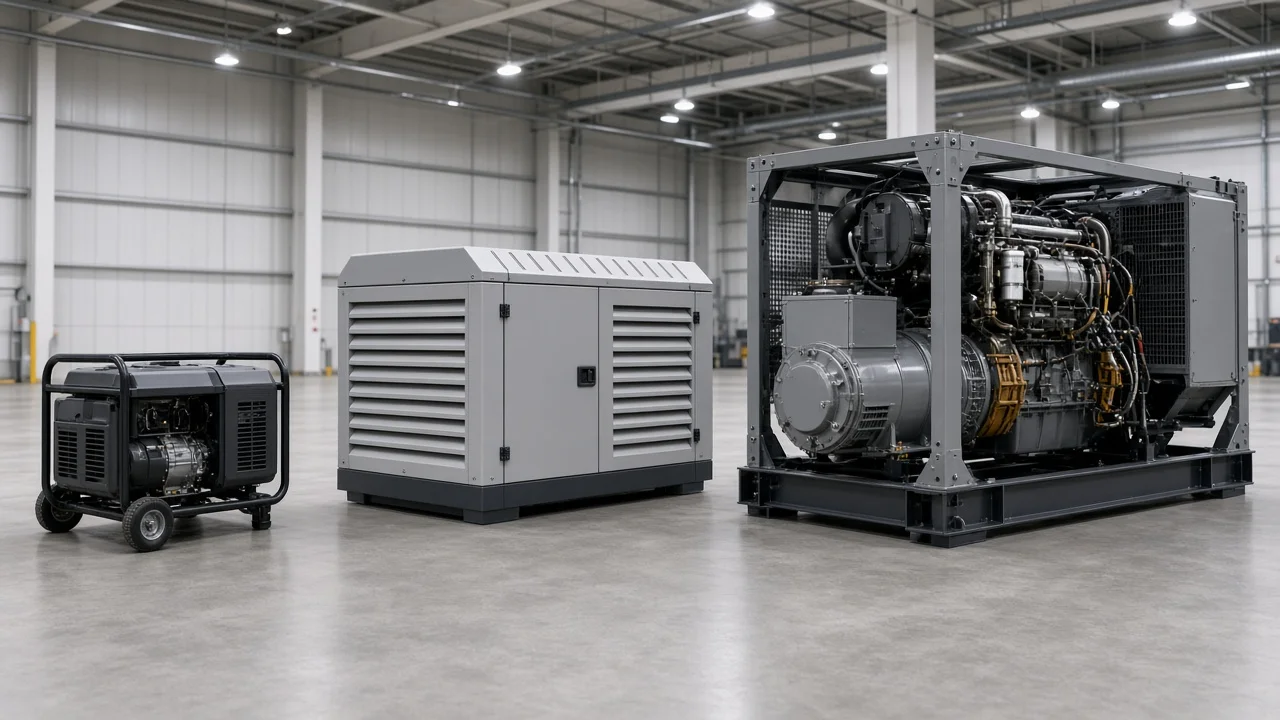



How electric generators are classified
A generator is a machine that converts mechanical energy into electrical energy to power electrical loads. The alternator uses electromagnetic induction: a rotating magnetic field induces alternating voltage in the stator. In commercial and industrial use, buyers call the full assembly of engine, alternator, skid and controls a generator set.
To compare the types of electric generators in Mexico, sort them by power, fuel, mobility and number of phases. Units connected to switchboards in Mexico must operate at the national frequency of 60 Hz.
- Portable or inverter: small tools and home use, with low power and gasoline or light diesel.
- Commercial stationary: backup for shops and offices, with small or medium power on diesel or gas.
- Industrial diesel: plants, job sites, pumping and mining, from 30 kVA to more than 1875 kVA.
- Industrial gas: sites with a gas network or tank, with medium and high power on natural gas or LPG.
- Trailer-mounted: mobile job sites and temporary events, from the 30–125 kVA series, usually on diesel.
Types of electric generators: portable and inverter units
This section covers light-duty portable and inverter units for hand tools, temporary lighting and basic household appliances. Industrial mobile generator sets must be assessed separately against their phase, power and load requirements.
Stationary backup units for businesses and buildings
Installers mount stationary generators on a fixed base. An automatic transfer switch panel connects them to the building. When the grid fails, the controller detects the loss of voltage and starts the unit within a few seconds.
This category is common in supermarkets, hotels, clinics and corporate buildings. For these buildings, see our guide on how to specify an emergency generator for buildings in Mexico.
Industrial diesel generators
Industrial diesel units are a standard power source for factories, logistics centers, water infrastructure and mining. SEER POWER is a Chinese maker of industrial diesel sets from 30–125 kVA to over 1875 kVA.
The 30 to 125 kVA diesel series covers 24 to 100 kW prime at 50 or 60 Hz. Its SP-30WC model delivers 30 kW prime (37.5 kVA) and 33 kW standby (41.3 kVA) with a Weichai WP2.3D40E200 engine. For industries with higher motor demand, you can review the 125 to 375 kVA industrial series in our catalog.
Natural gas and LPG generators
Gas generator sets use pipeline natural gas or liquefied petroleum gas stored in stationary tanks on the property.
For natural gas or LPG power projects, contact SEER POWER. Share your load, voltage, operating duty and fuel-supply details to discuss the configuration. To compare fuels, see our guide to choosing a generator by duty and fuel before requesting a quote.
Trailer-mounted, open or soundproof
The same industrial set can come on an open skid, in a soundproof canopy or on a trailer.
A closed canopy protects the unit from rain and dust and reduces outdoor noise. Does your project move power between job sites? Then review what to request in a trailer-mounted generator. You can also see our technical guide to industrial generator enclosures to compare airflow.
Single phase or three phase and standby or prime duty
Single-phase units feed lighting loads and small outlets, while three-phase units drive industrial motors and power boards. In industrial alternators, active power equals apparent power multiplied by the power factor. Use 0.8 only as a declared equipment rating or an explicit calculation assumption. All these power generators produce alternating current; direct current belongs to batteries and auxiliary systems.
For outage backup, check the declared standby rating. Prime power (PRP) applies to varying electrical loads. For prolonged constant loads, review Continuous power (COP) and the selected model’s limits against the actual load profile.
How to choose the right type
First confirm the 60 Hz site voltage and phases with CFE and your electrical engineer. Then choose the fuel based on site logistics. Decide whether the unit will stand in a room, in a canopy or on a trailer.
Always remember that exhaust gases contain carbon monoxide, which is a deadly hazard in areas without ventilation. Operators must not run portable generators indoors. You may install a fixed industrial generator in a dedicated generator room designed for the selected equipment. The room needs suitable ventilation, exhaust discharge and fire protection under applicable local requirements.