





Scope of Preheating
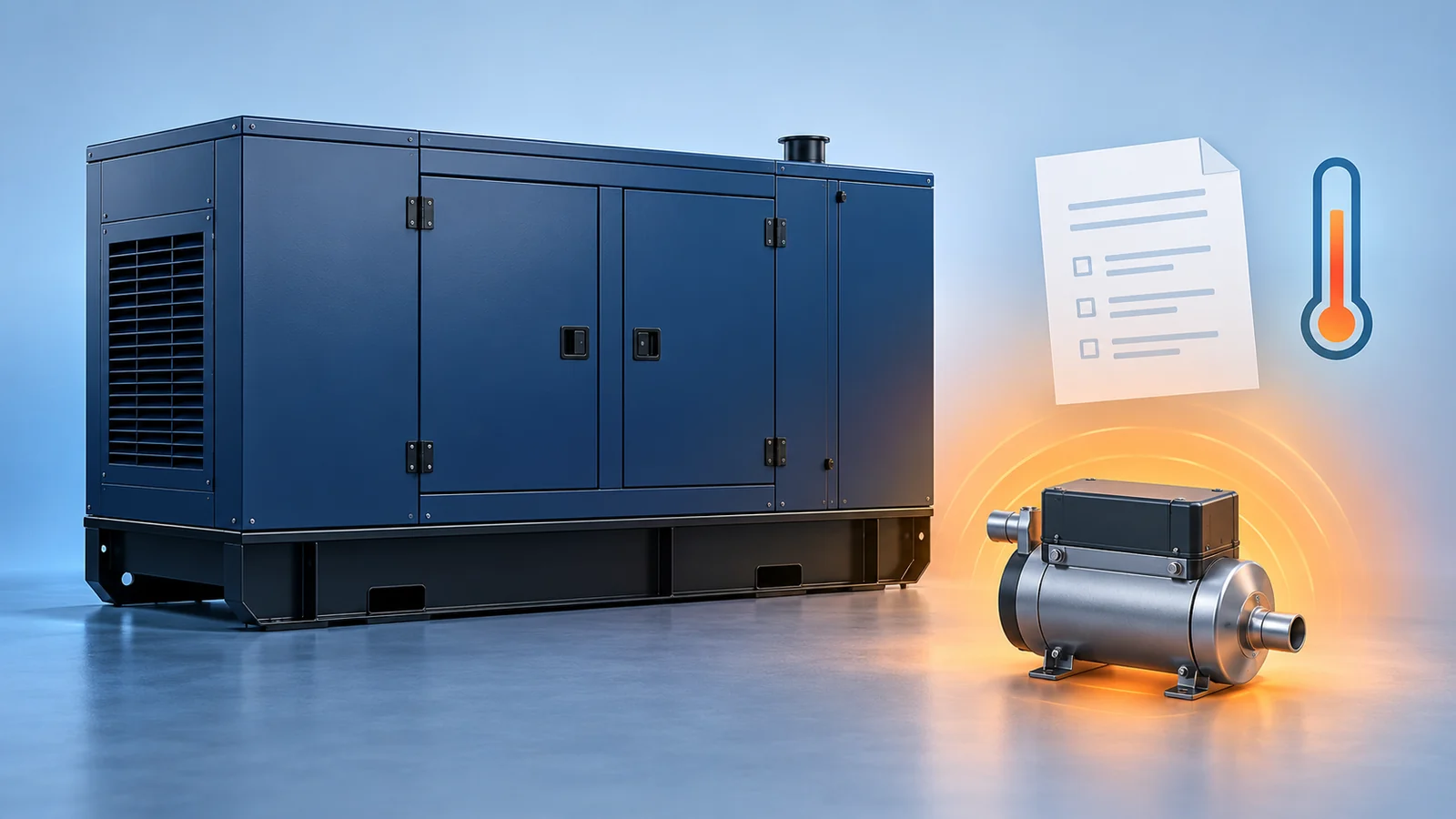
Diesel generator cold start heaters help maintain suitable engine conditions during standby. Starting a diesel generator does not demonstrate its ability to accept the required load. The project must assess those two responses separately.
This guide covers a stationary industrial generator set with a liquid-cooled engine and electric starting. Thermal requirements depend on the engine model and the site’s ambient conditions.
A project in Colombia must record the site’s ambient conditions and check whether any technical requirement from another country applies.
Engine and Heater Functions
Engine-driven generators use engine torque to drive the alternator. It converts mechanical energy into electrical energy through the action of a magnetic field. The EIA guide to electricity generation describes this conversion.
The heater maintains engine thermal conditions during standby. It does not determine the alternator’s electrical power capacity. The engine’s energy source and the electrical supply to its auxiliaries serve different purposes within the industrial package.
Cummins T-030, section 4.5.8, distinguishes engine heating from space heating. The coolant heater maintains engine thermal conditions, but does not determine the ambient temperature of the entire room. Rain protection does not establish the package’s ability to retain heat during standby.
Data for System Selection
The Hotstart selection guide considers engine size, coolant volume and the lowest expected ambient temperature. It also considers wind and system type. Thermosiphon and pump-driven units require different review criteria.
For the industrial generator, record the engine model and manual revision, along with ambient conditions and the proposed enclosure. The file must include the project’s standby duty. The supplier must identify the heater model and its thermal parameters for the declared ambient conditions.
Record the selected auxiliary’s voltage, frequency and power. Those parameters belong to the specific product. The plant’s electrical kW rating alone does not determine them.
Compare the proposal with the package intended for delivery. A change in engine parameters, coolant volume or enclosure requires a written response.
Supply and Control Systems
During standby, utility power may supply the auxiliaries where the design provides for it. Review the available supply and its failure indications. An illuminated lamp does not demonstrate effective coolant flow.
The Caterpillar package for C27 and C32 illustrates a system with a pump, thermostat and controls. Its electrical versions have their own parameters. This product example does not define technical requirements for every brand.
Control systems must match the approved package logic. The file must define the heater state while the engine runs. Qualified technical staff verify the system logic without bypasses or adjustments outside the approved requirements.
Other Components and Limits
The battery, oil and fuel may need their own heating equipment, depending on ambient conditions and engine requirements. An alternator heater that prevents water vapor from forming droplets serves a different purpose. The manufacturer determines the accessories appropriate to the expected conditions.
Preheating does not replace approved coolant requirements or freeze-protection criteria. Package life also depends on service requirements, fluid properties and ambient conditions. A heater proposal does not establish a specific reduction in fuel use.
Standby units supply industrial and data-center equipment whose service requirements are defined in the project.
Commissioning Checks and Records
Before commissioning, qualified technical staff review the system against both manuals: engine and heater. Hotstart warns that trapped air can interrupt flow and damage the element. Filling and air-removal methods depend on the specific equipment.
The test record must identify initial engine thermal conditions, site ambient temperature and applied loads. Add measured response times, alarms and conditions after the test. Distinguish observed results from capability that remains unverified.
Include routine tasks in the standby service plan. The common generator faults guide helps distinguish battery, control and other circuit problems. A low-temperature warning requires review. It does not identify the failed part by itself.
Safety and Package Response
Engine exhaust contains carbon monoxide. Operators must not run portable generators indoors. You may install a fixed industrial generator in a dedicated generator room designed for the selected equipment. The room needs suitable ventilation, exhaust discharge and fire protection under applicable local requirements.
Connections, adjustments and servicing belong to qualified technical staff under the site’s hazardous-energy control rules. Keep the coolant circuit closed while it is hot and pressurized. This text does not provide wiring, bleeding or heater-energizing steps.
Record open items, their owners and planned resolution dates. Compare results with the agreed criteria before accepting the package. A successful test does not guarantee future starts.