


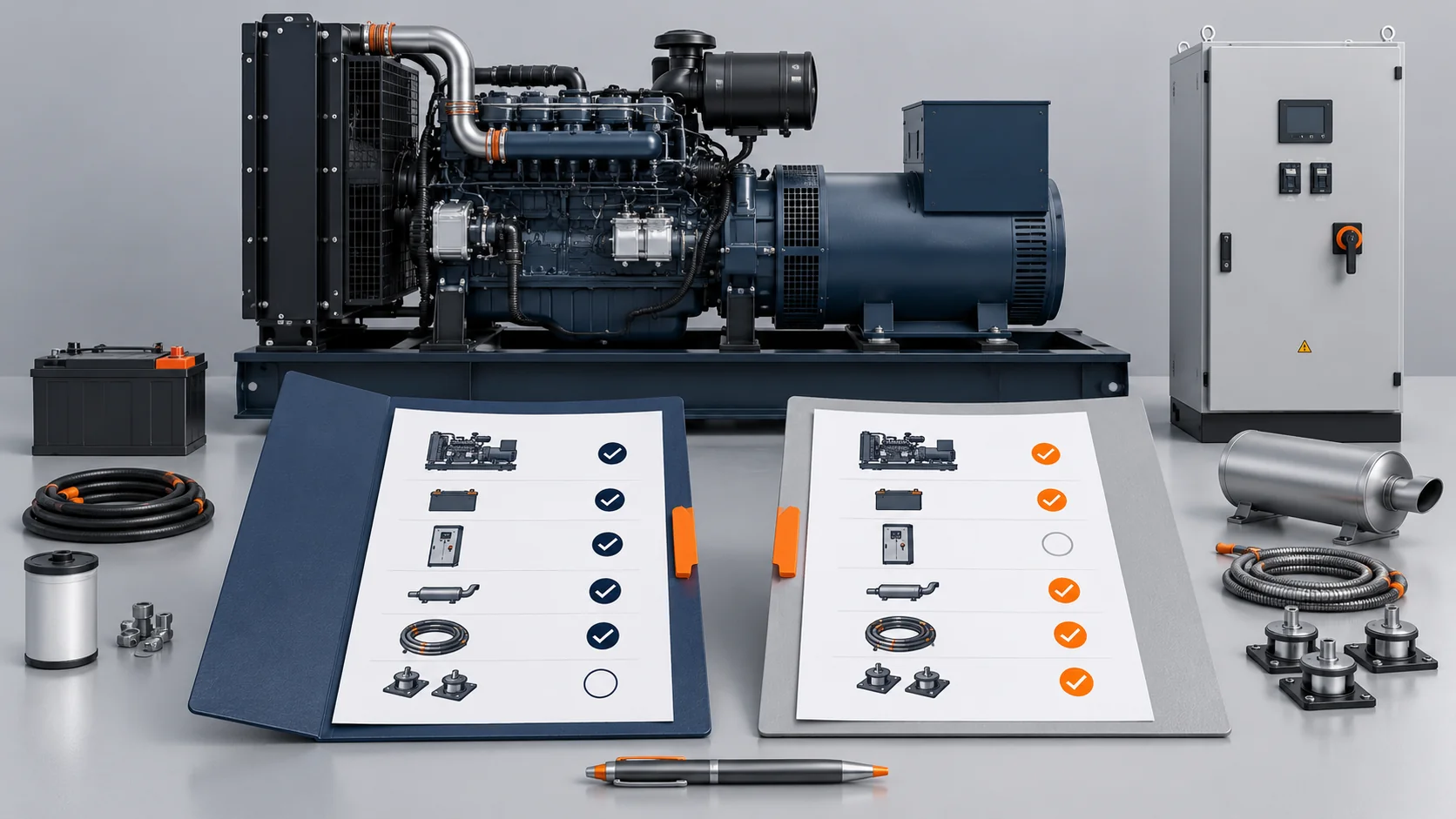



Criteria for Comparing Generator Set Price
Analyzing the generator set price requires reviewing each technical part of the offer. Two proposals with identical nominal power may have different costs due to the scope of supply. A generator combines several operating subsystems into a single machine.
In the industrial market, electric generators for continuous use coexist with backup equipment. Therefore, commercial value is best understood by comparing matching lists of mechanical and electrical parts.
Equipment Configuration and Scope of Supply
When reviewing an industrial generator set, buyers should examine the origin of the engine, alternator, and control panel. A generator set brings these elements together on a common structure. As an example, in its catalog for Latin America, Cummins states that it designs, manufactures, and tests its own sets.
Other manufacturers integrate parts from different brands onto the same skid. To evaluate a real offer, the buyer must request the identity of the set. It is also appropriate to request data for the engine, alternator, and panel, together with the formal scope of the proposal.
Industrial applications require verifying whether the proposal includes the base frame, vibration dampeners, silencer, and starting batteries. If the project requires these items and the offer does not include them, they can become additional cost items. An industrial generator requires clear mechanical data for installation at the site. Comparing these scopes prevents unforeseen expenses.
Electrical Parameters and Power Ratings
The ability to supply electricity depends on the service rating assigned to the machine. In technical specification sheets for generator systems, the manufacturer declares the rating applicable to each model. These conditions state whether the unit supports standby, prime, or continuous service.
According to factory guidelines, an engine may deliver different power outputs for each declared rating. A quoted maximum power rating requires checking the duty classification and the model operating limits against the planned load.
Voltage, Frequency, and Control System
The buyer must check the number of phases, voltage, and frequency required at the plant. As a specific example, the specification sheet for the X1.3 series for India describes the C20D5P model.
That document indicates 20 kVA and 16 kWe at a power factor of 0.8. This value does not represent a fixed rule. In each proposal, the rated kW, kVA, and power factor of the offered model must be consulted.
The control panel records system readings and events. The chosen generator type must have clear operating data according to its manual. If operational doubts arise, buyers can consult the guide on common issues in diesel generators as a technical reference.
Mechanical Components and Fuel Type
The main set connects an internal combustion engine to a rotating alternator. In this process, the alternator converts mechanical energy into electrical current through magnetic fields in its windings. This physical principle enables electrical power generation for user loads. The proposal must specify the coupling and the model of both components.
Engine Variants and Fuel
The fuel type available at the site guides equipment selection. The choice of diesel engines depends on on-site fuel availability and model data. On the other hand, engines designed for natural gas or propane exist depending on the manufacturer version.
For example, the specification sheet for the QSJ8.9G engine declares versions for natural gas and variants for propane across defined ranges. Each option requires reviewing the specification sheet of the quoted version and on-site supply. The offer must detail which fuel inlet parts come from the factory.
Auxiliary Components Versus Excluded Items
For an emergency generator set, it is advisable to check which mounting and interface components the offer includes. If backup power equipment is installed permanently, manual guidelines should be compared with the quotation. This review clarifies which support works are indicated by the manufacturer and which are assumed by the supplier.
In sectors such as hospitals and data centers, operational continuity depends on system integration. To provide power during commercial power grid failures, the plant requires a properly coordinated link. A generator set by itself does not ensure backup without pauses.
Scope of Transfer and Switching
An automatic transfer switch allows switching the load between the commercial grid and the generator set. This equipment can come in the offer or be quoted as a separate module depending on the project.
The proposal must state whether it includes the enclosure, interlocks, and control signals. If the quotation contemplates only the standby generator at the terminals, the client must define who supplies interface design and switchboards.
Operating Cost Versus Initial Investment
The initial purchase outlay constitutes only part of the equipment life-cycle expense. Total cost combines purchase value, fuel, and service according to intended use. No cost item should be calculated without evaluating real operating data.
When choosing a power source for the plant, it is advisable to request consumption tables at equivalent loads. To check deviations in fuel expenditure, it is useful to consult the guide on high fuel consumption in diesel generators as a technical reference.
Document Verification and Supply Limits
The service life of the set depends on operating and service conditions documented by the manufacturer, without this constituting a fixed promise. If a supplier includes the phrase “we supply energy” in its offer, the client must request an exact breakdown of the actual scopes and services covered.
The buyer must consult which dimensioned drawings, connection diagrams, and service manuals are formally included in the proposal. Likewise, it is advisable to verify which factory test reports accompany the quoted machine in the offer.
Key Questions to Evaluate the Commercial Proposal
Before approving a purchase order, the person responsible for technical assessment should ask the supplier the following questions:
- What service rating covers the quoted power according to manufacturer specifications?
- Does the quotation include an exhaust silencer, starting batteries, charger, and anti-vibration mounts?
- Is the automatic transfer switch included within the presented price?
- What factory test reports are delivered with the quoted equipment?
- What written warranty conditions and spare parts does local technical support offer?