


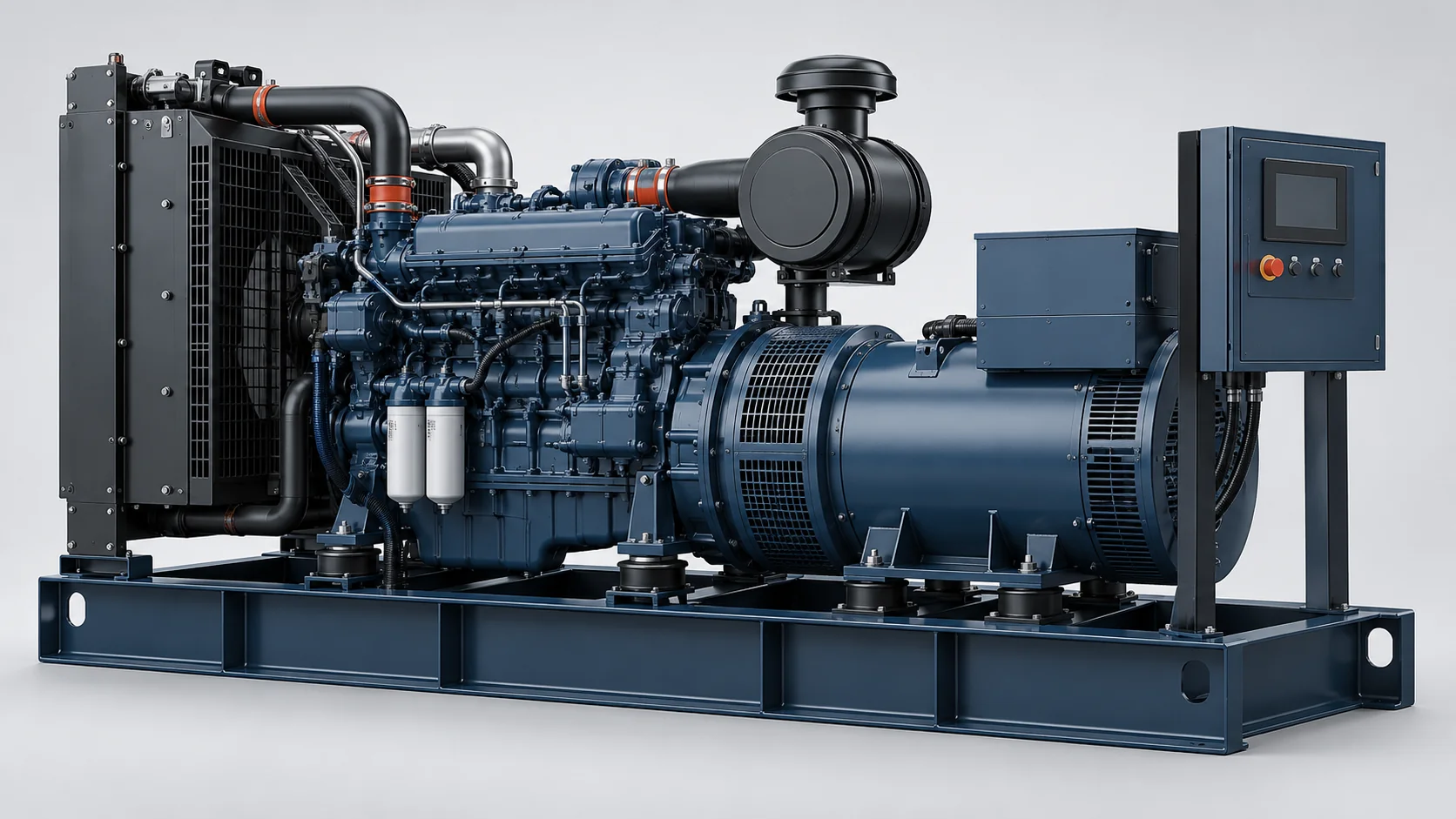



Definition of a Generator Set and Main Components
What is a genset in a technical project? Knowing the genset meaning helps a buyer pick the right unit for a site. In daily speech, people often use the word generator for the whole machine, not just the alternator. In these assemblies, the electric generator is the part that makes current.
A generator set forms a complete power generation system on one shared base frame. This unit joins the heat engine, the coupled alternator, and the maker's listed support systems. Together, they supply electricity as an independent power source for planned site loads.
Commercial generator sets do not all ship with the same factory parts. For example, the Cummins X1.3 spec sheet for India lists the engine, alternator, battery, silencer, and control system. Thus, the buyer must ask for the model's exact parts list.
Industrial facilities must select the model and duty required for the project. A portable generator label alone does not prove a unit fits the site. Each industrial genset carries nominal ratings defined for declared operating duties. The user must compare the model's operating duty against planned use to check power generation needs.
Energy Transformation and Mechanical Subsystems
Learning how a genset works starts with two linked energy stages. First, the engine burns fuel to convert fuel into mechanical energy at the drive shaft. Next, the alternator acts to convert mechanical energy from that shaft into alternating current. Through electromagnetic induction, a moving magnetic field produces voltage to generate electricity.
In units with a documented synchronous alternator, the alternator control regulates voltage while the engine governor adjusts frequency. Dynamic stability under load changes varies across models. Therefore, the designer must request the maker's control data for each model.
The maker sets the allowed fuel for each engine version, offering diesel engines alongside gas models. For example, Cummins QSJ8.9G records cover natural gas or propane gas options based on the factory version. The buyer must check the model's fuel system and never assume fuel conversions between versions.
During operation, the cooling system on the model's spec sheet removes engine heat. Under similar conditions, load level directly affects fuel efficiency and fuel burn. To check the factors that raise plant fuel costs, review 4 causes of high fuel consumption in diesel generators.
Operating Duties and Functional Roles
The machine's role depends on the site's electrical layout. A common setup provides backup power during a utility power outage. In this scheme, a standby generator supports critical loads during power cuts in the public power grid.
Not all units detect grid loss or start on their own, as automatic start depends on project controls and switchboards. Also, the market label emergency generator set points to standby duty. Yet that name alone does not fix yearly hours or load factors.
When the set supplies main power without a power grid, engineers check its declared rating against site loads. The engineer must consult the specification sheet to pick the right continuous service or prime power rating.
In data centers and hospitals, project teams set strict targets for start response and steady power. The selected unit must meet the exact needs of each project. Standby system design also requires checking the dynamic behavior of all coupled parts.
Key Parameters on the Specification Sheet
When reading a spec sheet, the buyer must distinguish two stated power outputs. Makers list apparent power in kVA and state rated active power in kW or kWe. Both numbers reflect the maker's declared nominal power factor. The engineer then checks this nameplate value against the actual load power factor.
For example, the Cummins X1.3 C20D5P datasheet for India shows 20 kVA apparent power and 16 kWe active power. This unit declares a 0.8 nominal power factor on its nameplate. Those figures apply only to that model and market. They do not set a rule for all generator sets or for Peru.
Nominal voltage in V and frequency in Hz must also match the site loads. Likewise, rated current in amperes lets the buyer compare the unit against the project design. Where motors have heavy starting demands, the buyer should request the alternator's transient capacity.
Real Scope of Supply and Operating Limits
A genset works inside its skid frame to produce electricity on its own. Switching loads between the utility power grid and the generator requires a transfer switch at the site. Because not all factory packages include this switch, the buyer must check the scope list.
Engine starting and reaching steady speed take a short time after a grid outage. For this physical reason, the genset alone cannot prevent brief power pauses. Loads that cannot tolerate short breaks need auxiliary no-break systems defined by the project.
Site installation needs depend on the model, project, and local rules. Plans must cover air intakes, safe outdoor exhaust discharge, fuel lines, and enclosure airflow. Buyers must also check whether the unit includes a built-in fuel tank or needs separate storage. Always consult the maker's manuals for exact site guidelines.
The long term service life of the set depends on preventive maintenance and clean fuel. Buyers must request operating limits, manuals, and written warranty terms for the model. If the team sees operating deviations in the unit, consult common issues in diesel generators as a reference.