


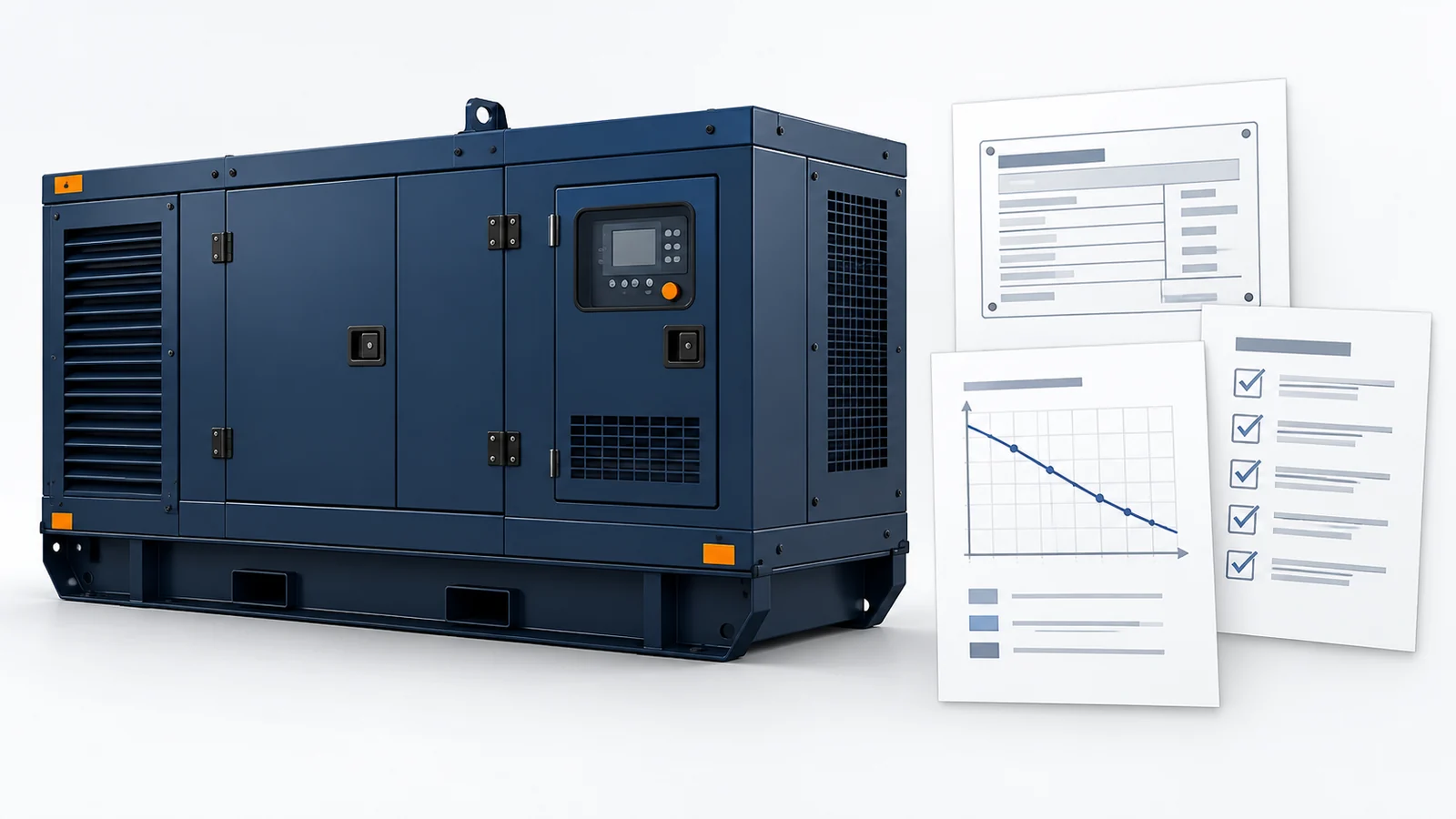



ISO 8528 generator set standard scope
The ISO 8528 generator set standard helps buyers check engine-driven AC generating sets. Check the part number and year that support each claim. Confirm that the stated use matches the site’s needs. A reference to an international standard does not show the full scope of an offered machine.
The series covers more than an engine or alternator on its own. For an industrial generator, check the whole package and its related equipment. Hospitals and data centers may need extra project requirements. Review these needs against the supplier’s specific generation offering before accepting a proposal.
Match each part to the document
ISO 8528-1:2018 covers classes for application, rating and performance. ISO lists it as published, with a revision in progress. A draft is not a published replacement. Check the official catalog when writing the specification, rather than assuming that the draft has replaced the stated edition.
ISO 8528-5:2025 covers design and performance of the engine and AC generator as a unit. ISO lists the earlier 2022 edition as withdrawn. Record which edition the project requires. Ask the project engineer to assess changes before agreeing to use a different edition in the supply documents.
ISO 8528-6:2023 covers whole-set test methods. Its abstract also describes simulation as another way to assess capability. Check whether a report presents a physical test or a simulation. Compare that type of evidence with the test plan and the needs agreed for the project.
Read the rating with its conditions
Compare prime power, emergency standby and continuous ratings using the maker’s stated conditions. Standby generators provide electrical power under a defined duty. A power outage does not define those limits. Check run time, load factor and any permitted overload in the rating documents for the offered model.
Do not read maximum power as an output available for indefinite use. Match the specified voltage, frequency, kW and kVA to the planned duty. For an industrial genset, check the site conditions too. Ask the maker to explain gaps or conflicts in the rating data before choosing the set.
Fuel is also specific to the model. Diesel generators and gas-engine sets can have different ratings and load responses. When comparing diesel and natural gas equipment, use the documents for each model. A general standards reference does not show that both versions share the same operating limits.
Check the tested configuration
Ask for a report with the model, configuration and test method. Match its output, frequency and conditions to the offered genset. Component data can help the review.
An alternator certificate covers that component. It does not prove whole-set performance under the stated test conditions.
Keep the report number, date and equipment identity with the purchase record. Compare the listed options with the quoted scope of supply. Changes to the engine, alternator, controls or cooling package can leave gaps in the evidence. Ask which results still apply and how the supplier supports any changes to the tested design.
Check the load sequence and recorded voltage and frequency response against the agreed test criteria. Do not take numerical pass limits from a short catalog abstract. Use the authorized full standard and the approved test plan to check the results. Confirm that the edition is correct.
List open questions in a comparison sheet. Name the person who reviews each answer and record the date. Link each closed question to a document.
This record helps buyers compare proposals. Similar product names do not prove identical technical performance or the same tested scope.
Separate equipment from system approval
A report on equipment does not prove how all connected power systems will perform. For standby power, review the transfer switch and switching sequence separately. Our generator paralleling checks outline further questions for sets that will connect to a live bus at the site.
Reliable power also needs proper installation, inspection and service over the long term. Use the standby maintenance planning guide to plan later tasks and records. Neither a standards reference nor a passed test can ensure future uptime. Site design must address loads that cannot accept a brief loss of supply.